
By Sagarika Rastogi
There’s a sentiment that people in Northeast India have lived with for generations — “cut off.” Cut off from markets, from ports, from the kind of economic momentum that the rest of the country has sometimes taken for granted. Eight states, extraordinary natural wealth, a young population full of ambition, and yet — the sea has always felt very far away.
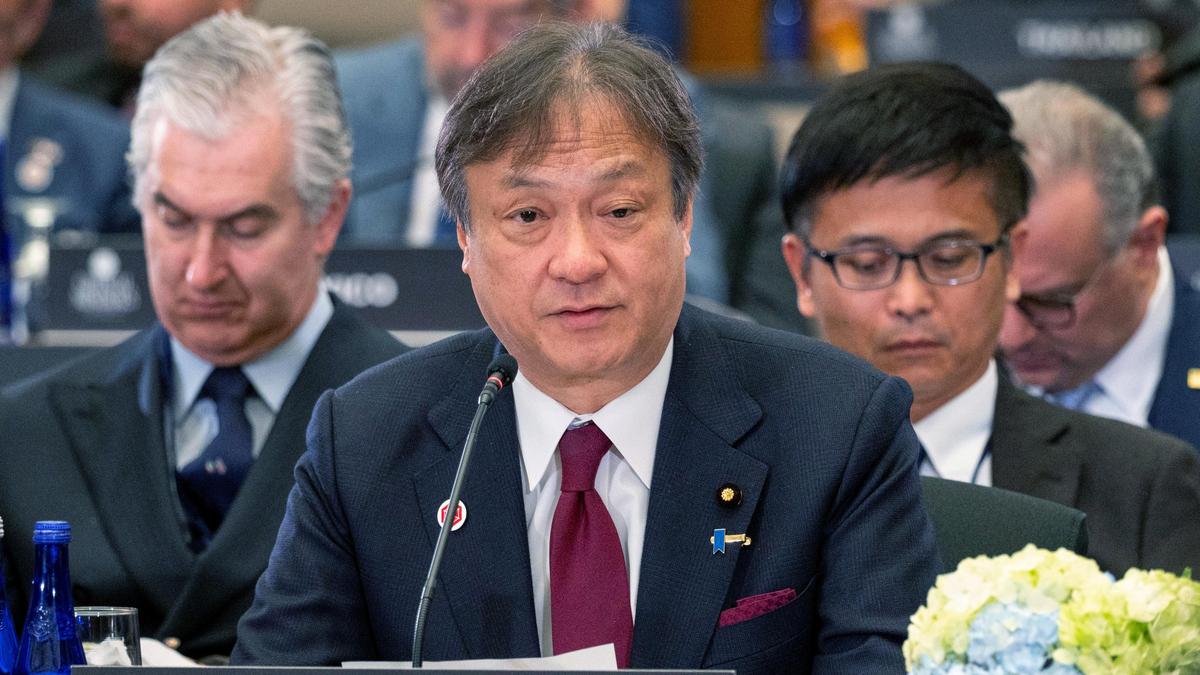
That may be about to change. On Friday, Japan’s Deputy Foreign Minister Horii Iwao stood up at a conference in Shillong and said something that deserves more attention than it will probably get in the national headlines: Japan will connect Northeast India to the Bay of Bengal. That was said not in vague, diplomatic language but actually with an “Industrial Value Chain”, with infrastructure and with real intent.Horii was delivering a speech at the Sixth India-Japan Intellectual Conclave, an event organized by the Shillong-based think tank Asian Confluence.
The conclave, which had the theme ‘Kizuna 6: Scaling up Partnerships,’ with ‘Kizuna’ being Japanese for bond, had the platform bring together policymakers, business leaders, and thinkers from both nations. The message from Tokyo’s representative was clear: Tokyo sees the Northeast as a catalyst of change and not a static area. “Japan will support connectivity linking Northeast India to the Bay of Bengal and the Indian Ocean. Northeast India is located in a pivotal geopolitical position as a gateway to Southeast Asia,” Horii said in his speech.
What this really means is that Japan has been planning this in secret for a long time. The deep sea port in Matarbari, Bangladesh, which is being developed in collaboration with Japan, is an important part of this plan as well. Once the port is developed, the possibilities for the landlocked states in the northeast may be altered significantly. As part of the Free and Open Indo-Pacific policy of Japan, the idea is to primarily develop a value chain that connects the manufacturing as well as agricultural potential of the northeast states of India through a maritime route via Bangladesh and the rest of the Bay of Bengal.The day after he visited Shillong, Horii also flew down to Guwahati, where he met Assam Chief Minister Himanta Biswa Sarma. The meeting was wide-ranging, covering everything from infrastructure development to semiconductors, as well as the Tata OSAT facility that is being developed in Jagiroad, which Japanese businesses are planning to use as a potential electronics manufacturing facility. Horii invited Sarma to visit Japan, while Sarma invited business leaders in Tokyo to visit Assam.
It’s also a question of strategic calculus, however. A look to the south and southeast from Japan would show that China’s Belt and Road Initiative is rapidly extending its reach in South Asia as well as Southeast Asia, and a prosperous Northeast India, linked to a new Indo-Pacific supply chain network supported by Tokyo, is just as much in Japan’s interest as it is in India’s or Guwahati’s interest. There’s a sense in which geopolitics and development aren’t mutually exclusive here; they’re mutually inclusive. To the average citizen of Manipur, Meghalaya, Nagaland, or Arunachal Pradesh, international diplomacy sessions such as those that took place in a room in Shillong this week may seem a long way off. But as those sessions ultimately do, opportunities that didn’t exist before will begin to appear.
It’s also true that the Northeast has been promised much in the way of development in the past. What’s different this time is that it’s a specific port, a specific facility, a specific industrial corridor, and a consistency to Japan’s engagement in this region that spans several years and several governments.