
By Agrim Agrawal
TEHRAN- The Supreme Leader of Iran, Ayatollah Ali Khamenei, who is the most influential political and religious figure in the country, was assassinated in a chain of synchronized U.S.-Israeli airstrikes on Iran on February 28, leading to counter-strikes throughout the Middle East that were causing the country to fear a potential far-reaching war.
Reports by Israeli and Western leaders stated that the Iranian high-ranking leadership had been hit by the strikes in Tehran. The assault was said to have hit one of the facilities related to Khamenei, with devastating effects on the location, killing a number of his family and top officials.
The attacks formed an expansion of a military attack by the United States and Israel on Iranian military and strategic facilities, such as missile facilities and command centres. According to the Israeli officials, the operation was supposed to sabotage the Iranian nuclear and ballistic missile programs and undermine the leadership system of the country.
Khamenei, who had governed Iran since 1989 after the demise of Ayatollah Ruhollah Khomeini, had overall control of the government, the armed forces of the country, and the judiciary. Under his leadership, he influenced the foreign policy of confrontational Iran and the United States and Israel, as well as the role of the Islamic Revolutionary Guard Corps and groups allied with Iran as militant worldwide.
Iran has counter-striken with missile and drone attacks on Israeli targets and American military bases in the Gulf within a few hours after news of his death, an action that indicates that the war may be a long-lasting and escalating conflict. Masoud Pezeshkian, the Iranian President, promised revenge, terming the killing as an act of aggression, and it was a legitimate responsibility of the Iranian state to avenge the death of the leader.
There is fallout from the strike that has extended beyond Iran. The news led to demonstrations and clashes in some of the Middle East and South Asian regions, such as Pakistan and Lebanon, as both the proponents and those against the Iranian government responded to the news. According to analysts, the death of Khamenei would destabilize an already unstable region, particularly since the Iranian network of allied groups, dubbed by some as the Axis of Resistance, is deliberating how to react.
Meanwhile, the United Nations and other global leaders have called for restraint over the fears that the war may spread to an even bigger regional war that will pose a threat to global energy and international shipping linesino the Persian Gulf.
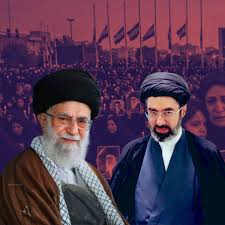
In Iran, they announced a 40-day official mourning period, and masses of people thronged Tehran to honor the late leader in state funeral services.
The death of Khamenei is among the most significant losses in terms of leadership in the history of the Islamic Republic and has ushered in an unpredictable future of politics in the country. As the Assembly of Experts, which has the power to pick the next supreme leader, the next few weeks may either see Iran transition into the continuity being pursued by another hard-line cleric or the political changes may be much more radical.