
By Ishita Malakar
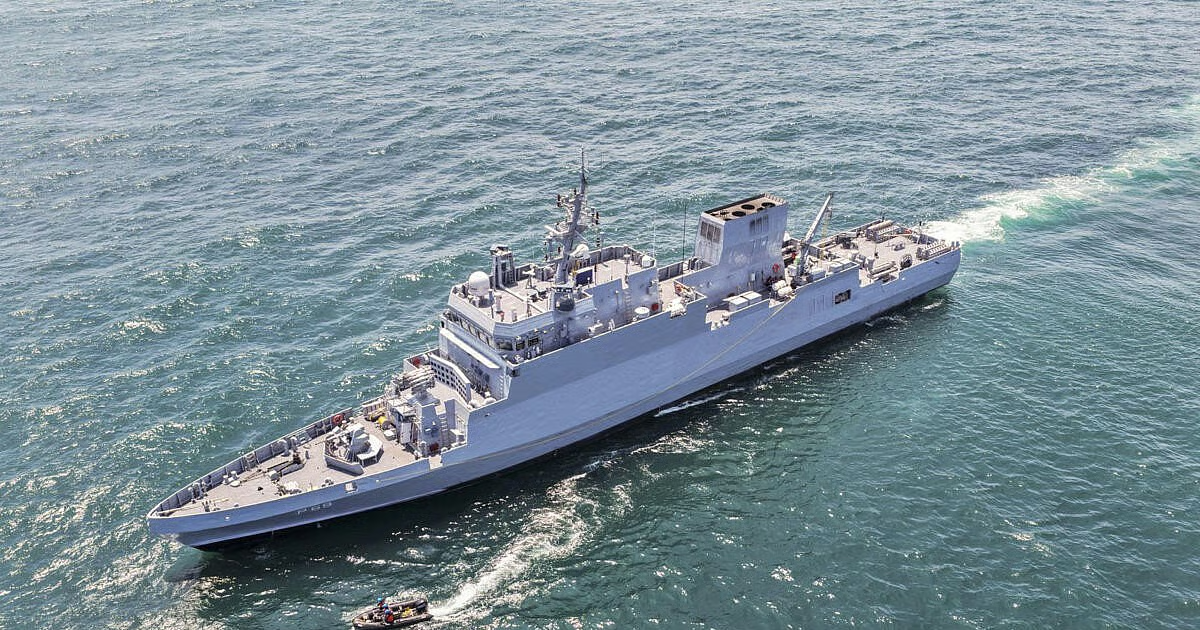
Pune: The Indian Navy has welcomed Androth, a homegrown anti-submarine warfare (ASW) ship, into its fleet, a strategic move to strengthen its maritime capabilities as China’s influence grows in the Indian Ocean.
Androth is the second ship in a series of eight anti-submarine warfare shallow water craft (ASW-SWC) being built by Garden Reach Shipbuilders and Engineers (GRSE) in Kolkata. The Navy officially received the vessel on Saturday, marking another significant step in India’s journey toward self-reliance in defense production, as stated in an official announcement. These ASW-SWC platforms are set to boost the Navy’s capabilities in undersea warfare and coastal surveillance.
Named after Androth Island in Lakshadweep, the ship’s name carries both strategic significance and symbolic meaning, emphasizing India’s commitment to protecting its vast maritime borders.
At about 77 meters long, these vessels are the largest Indian naval warships powered by a diesel engine and waterjet propulsion system. They come equipped with cutting-edge lightweight torpedoes and domestically developed anti-submarine rockets, enhancing the Navy’s resources for operations close to shore, according to officials.
The Androth has been built with over 80 percent indigenous content, highlighting the government’s vision of Aatmanirbhar Bharat, or self-reliant India. The successful delivery of this vessel represents a major step forward in the Navy’s ongoing efforts to promote indigenisation in shipbuilding. It also showcases the growing capabilities of India’s defence manufacturing sector, which is gradually decreasing its reliance on foreign imports while bolstering national security and technological independence.
The Navy has hailed the delivery of Androth as a significant step forward in its quest for homegrown shipbuilding and technological independence. This project, part of the government’s Aatmanirbhar Bharat initiative, boasts over 80 percent indigenous content, showcasing the increasing capabilities of India’s domestic defense sector.
Officials emphasized that the successful launch of the vessel not only demonstrates the skill of Indian shipyards in handling complex naval projects but also underscores the Navy’s commitment to promoting local innovation and reducing reliance on foreign suppliers. By consolidating advanced design, engineering, and manufacturing processes, this program is viewed as a key element in strengthening India’s long-term maritime security while also boosting the national economy through defense indigenization.