
By Srija Kumar
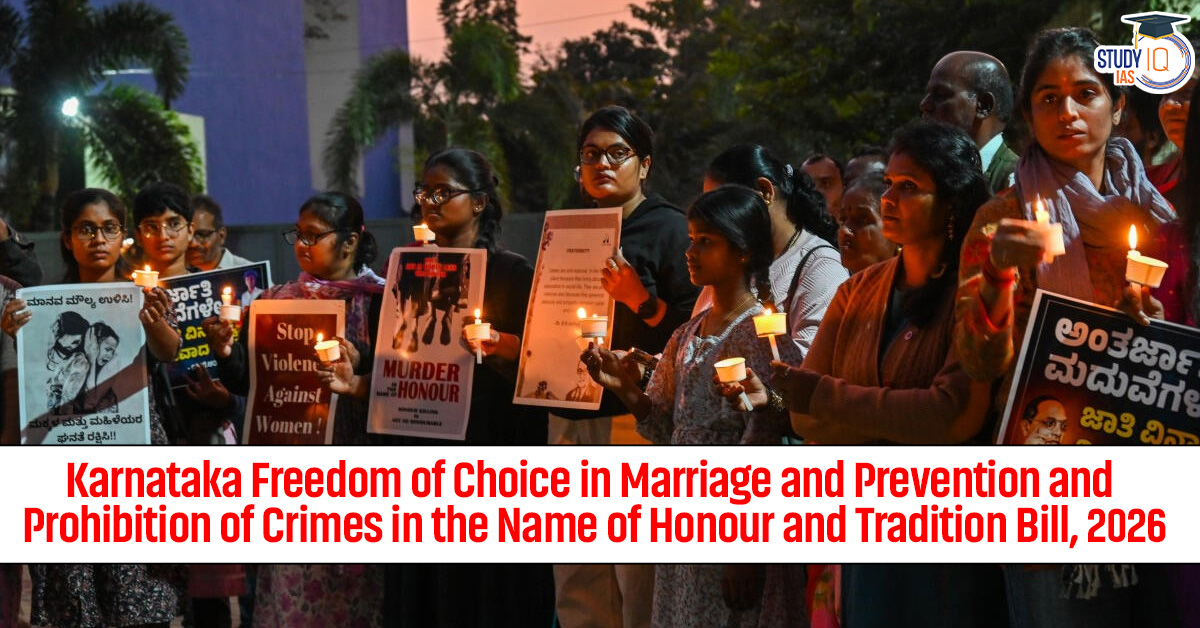
The government of Karnataka has initiated a legislative process to criminalise honour killings, with the intention of reducing violence against couples of any caste or religion who choose to marry or reside together, contrary to their community’s wishes. The draft bill, entitled Karnataka Prohibition of Honour Killings Act, attempts to close gaps in the current criminal law by specifically acknowledging that honour killings are collective and conspiratorial in nature. Although murder is criminalised under Indian Penal Code, officials from the state argue that the involvement of family members, caste councils, and community groups in murder frequently complicates the investigation of alleged honour killings under laws relating to homicide.
The draft provides for creating state-run safe houses for persons requiring safety from credible threats. This is so they cannot be prosecuted as such, establishing a requirement for immediate police protection upon the filing of any complaint. Creating special police cells in each district of the state dedicated solely to the prevention and monitoring of offences of honour killing has also been suggested. Additionally, the law will make any informal caste panchayats or community councils who incite, adjudicate or facilitate violence or murder of any person will be held legally accountable as well.
The move follows years of advocacy by women’s rights groups and civil society organisations, which have documented cases in which young couples, particularly those in inter-caste or inter-faith relationships faced intimidation, assault or death. Activists argue that treating these incidents as “family disputes” has allowed perpetrators to evade accountability and reinforced a culture of silence.
The Bill has resulted in tension within the state, where caste ties to politics are strong. Influential communities use their numbers and wealth to influence political party operations; certain groups argue therefore, that the Bill is a violation of local customs and a community’s right to self-determination.
Politicians opposed to the Bill have questioned if the existing laws, enforced correctly, can do enough. Proponents of the Bill argue that the passage of a stand alone law would demonstrate that caste based violence and religiously motivated violence are intolerable.
Several other states have considered or created similar legislation. However, the state’s action may create a model for other states in southern India.
As conversations continue, there continues to be a focus on how to put the law into practice. Protection advocates say the success of The Bill, for a couple in danger, will come down to reasonable enforcement, sufficient witness protections and ongoing political support. If effectively implemented and enforced, this legislation could significantly enhance individual choice and constitutional rights in the state.