
By Smritika Banerjee
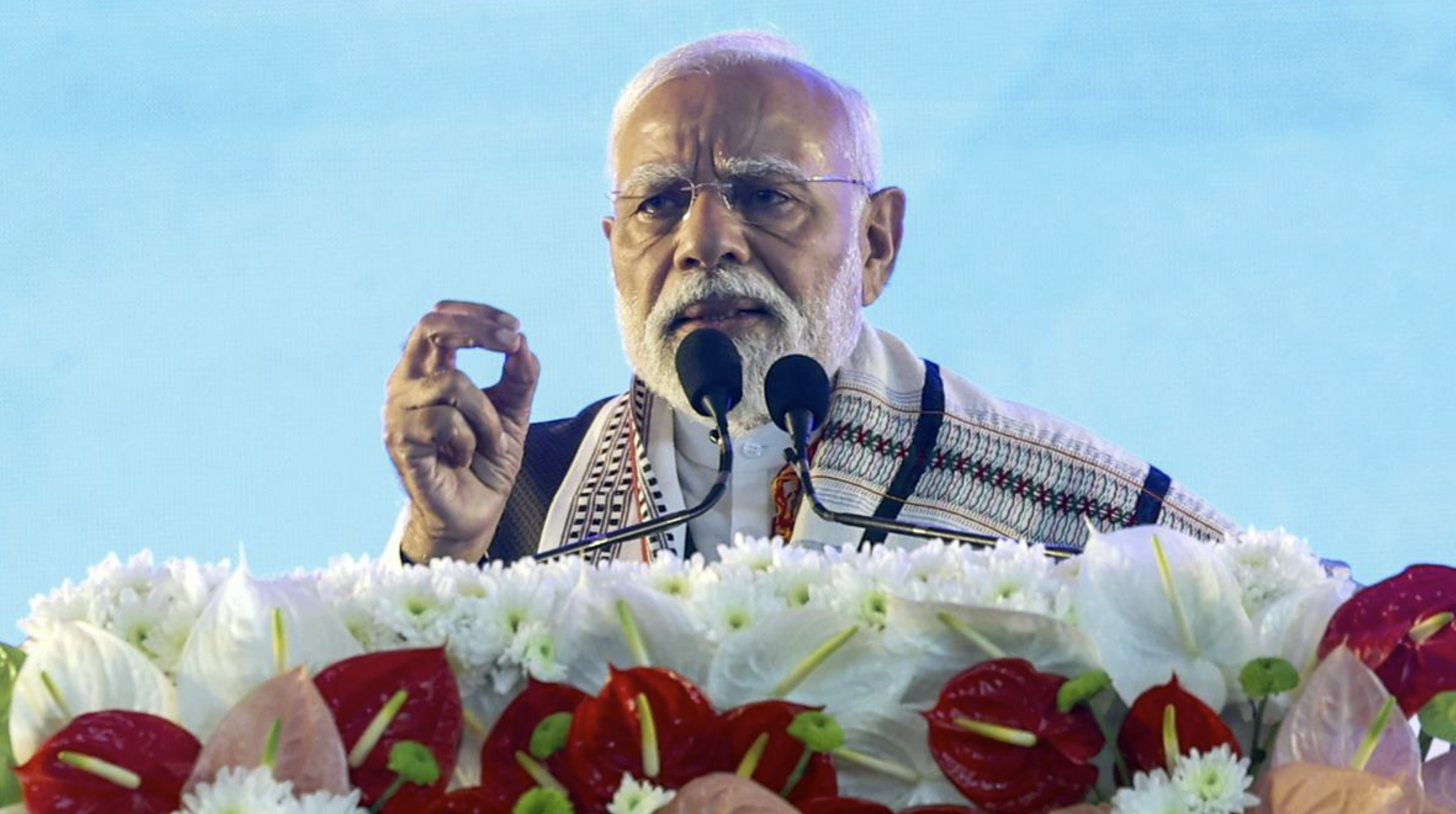
Prime Minister Narendra Modi has made his first official visit to Manipur since the outbreak of ethnic violence in May 2023. Prime Minister Narendra Modi announced and laid the groundwork for development projects exceeding ₹8,500 crore, covering a wide range of sectors such as urban infrastructure, healthcare, education, and connectivity.
Coming more than two years after the initial unrest, Modi’s visit was highly anticipated and closely monitored, with substantial deployments of security personnel from both state and central forces in critical areas such as Churachandpur and Imphal.
In Churachandpur, a district affected by recent violence, he laid the foundation for initiatives worth over ₹7,300 crore and engaged with internally displaced persons. Additionally, in Imphal, the Prime Minister inaugurated infrastructure projects valued at more than ₹1,200 crore, underscoring his focus on regional development and relief efforts.
In a public area, Prime Minister Narendra Modi acknowledged the recent violence that has affected Manipur, expressing hope for brighter days ahead. He also highlighted the significance of the name of the state, noting that ‘Mani’ means jewel, which symbolizes the potential for the Northeast to flourish in the future.
Modi assured the residents that the central government is fully committed to restoring peace and normalcy in the region. He also emphasized that choosing the path of harmony by all the communities together is essential for securing a better future for the younger generations.
The Prime Minister’s visit to Manipur, a move both political and symbolic, took place amid ongoing criticism from opposition parties who argued that his response to the crisis had been too slow.
Despite the tense political climate, the Prime Minister emphasized themes of unity, progress, and reconciliation in his address. He praised the bravery and resilience of the people of Manipur, describing the region as a land characterized by “courage and determination.” His initiatives and words sought to send a message of steadfast support, reaffirming a commitment to rebuilding the state’s infrastructure and healing its social divisions.