
By Srijita Chakraborty
Nepal’s Prime Minister Khadga Prasad Oli resigned on Tuesday, 9 September, following days of violent protests sparked by the controversial social media ban and long-standing anger over government corruption.
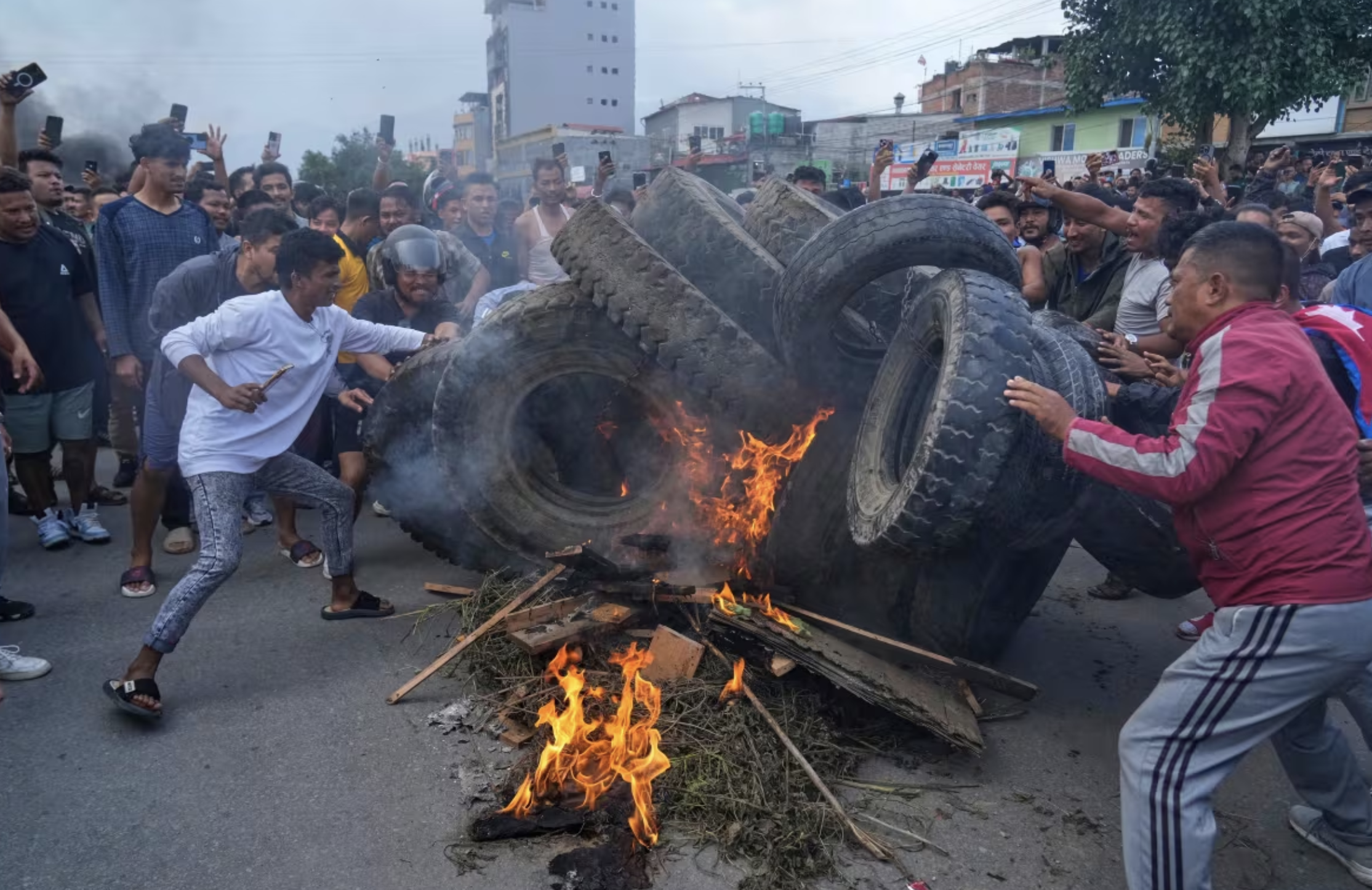
The unrest following the government’s ban on Facebook, X, and YouTube last week, escalated into deadly clashes on Monday when demonstrators stormed parliament and torched the homes of top leaders. The ban was lifted early Tuesday, but violence continued across Kathmandu despite an indefinite curfew.
Protesters targeted the residences of President Ram Chandra Paudel, Nepali Congress leader Sher Bahadur Deuba, Home Minister Ramesh Lekhak, and Maoist leader Pushpa Kamal Dahal. A private school owned by Deuba’s wife, Foreign Minister Arzu Deuba Rana, was also set ablaze.
Videos circulating online showed crowds chanting against corruption and nepotism while police urged them to disperse. “Our youths and friends are getting killed,” one protester said. “We will not stop until this government is finished.”
The protests also forced the partial closure of Kathmandu’s Tribhuvan International Airport, disrupting flights, the aviation authority said. Schools in the capital remain shut.
Oli announced his resignation “to allow Nepal to take further steps towards a political solution,” and President Paudel has accepted it, beginning the process of selecting a new leader.
Kathmandu Mayor Balendra Shah appealed for calm, telling demonstrators, “Your murderer has resigned,” but protests showed little to no sign of slowing as demands for accountability and reform grew louder. Security forces have been deployed in large numbers around government buildings and key intersections in Kathmandu.