
By Smritika Banerjee
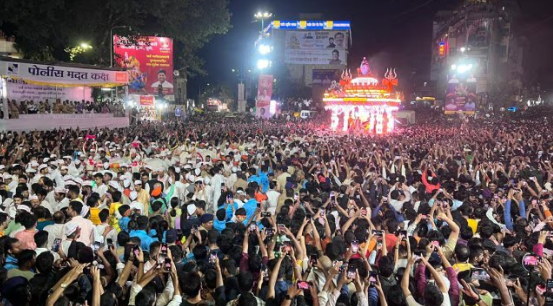
A new wave of environmentally conscious initiative is transforming how the Pune city celebrates the Ganeshotsav as it gears up for its grand festival. From solar powered pandals to eco-friendly idols, some mandals throughout the city are embracing sustainable techniques which demonstrate that devotion and eco-consciousness can co-exist.
The Shree Shivraj Mitra Mandal in Bhavani Peth is one of the pandals that demonstrated tremendous efforts. This year, they’ve set a remarkable example by powering their entire Ganesh celebration with solar energy. Piyush Shah, an art director and the visionary behind the project, explains that they have installed a solar garden, a solar tree, and multiple solar panels to meet their energy needs. In addition to the pandal being illuminated, it features a mobile charging device for the devotees signifying the manner green energy meets the needs of the community. At a time when India leads the world in solar capacity, Shah added that this endeavor aims to showcase the potential of renewable energy and lessen the festival’s carbon footprint.
The sustainability movement is clearly visible in several pandals. The historic Shrimant Bhausaheb Rangari Ganpati trust, known for installing the city’s first Ganpati idol in 1892 still continues its tradition of eco-friendliness. They use paper pulp and sawdust in idol craftsmanship, avoiding harmful materials like Plaster of Paris (PoP). Trust’s president Sanjeev Javale points out that their first idol was eco-friendly and reflected a long-standing commitment to environmental consciousness. The trust also looks after keeping sound levels moderate and reducing noise pollution during the celebrations.
The Navjyot Mitra Mandal Trust, Yerwada, is promoting eco-friendly immersion practices. They’ve distributed shaadu maati (natural clay) idols to over 50 families, encouraging devotees to perform home immersions instead of public displays. With the help of organizations like Punaravartan the mandal provides buckets and cloths to help families collect and recycle the dissolved clay, helping conserve natural resources and prevent water pollution.
The Pune Municipal Corporation supported these efforts with the help of new guidelines, which prohibit toxic chemical paints and PoP idols and mandate the use of biodegradable materials. India has achieved the third place in solar power capacity and ranks fourth globally in renewable energy installed capacity.
These eco-friendly Pune Ganeshotshav activities are a reminder that cultural history and environment both can be honored. By combining ancient customs with eco-friendly methods, Pune is leading the way in celebrations, ensuring prosperity for both citizens and nature.