
By Swetha Anil Kumar
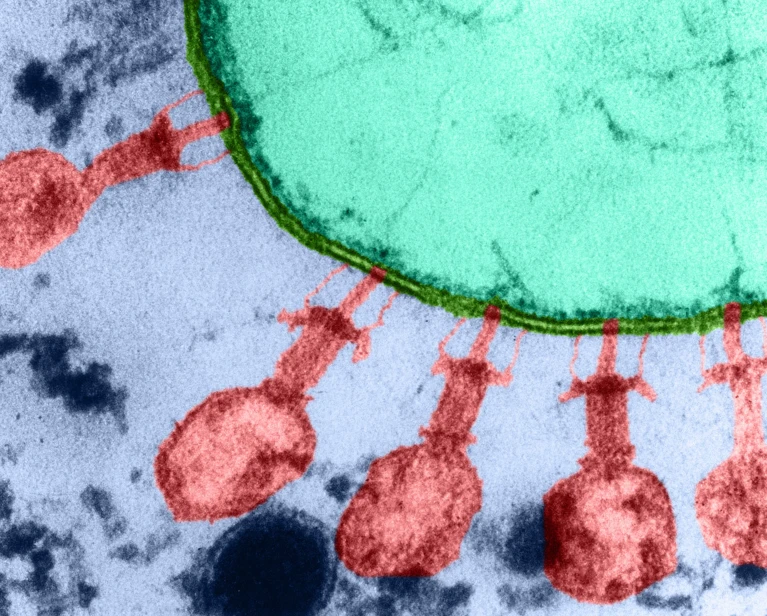
Scientists from Stanford and Arc Institute used an AI genomic model to design the first functioning virus genome from scratch, and they’re capable of hunting down and killing strains of Escherichia coli (E. coli). It is the world’s first entirely AI-generated genome.
The study was conducted by Hie, King, and colleagues. It was posted on the preprint server bioRxiv on 17 September and has not yet been peer reviewed. The authors say it shows the potential of AI to design biotechnological tools and therapies for treatment.
AI is already being used by scientists to design individual proteins and even small multi-gene systems. Creating an entire genome, however, is way more complex. A genome has many genes that work together. It also has regulatory switches. These help an organism grow, reproduce, and survive. Getting all of these to work together was a huge challenge for scientists until now.
The researchers selected a small virus named bacteriophage ΦX174 (pronounced phi-X-174) for the test case. This virus has a tiny yet tricky genome – 5,386 letters of DNA and 11 genes, most of which overlap each other and it infects E. coli bacteria. This virus was the first genome ever synthesised from scratch in 2003 and also the first ever to be fully sequenced in 1977. Now, it has become the first to be designed by AI.
The scientists used a genomic language model named Evo to train the AI, which was fine-tuned on thousands of genomes from the virus’s family so it could speak the dialect of ΦX174. The AI-generated thousands of candidate genomes with the help of prompts.
There are a lot of bio security concerns around this genome and experts warn that AI-designed genomes could pose risks if misused or left unregulated.
Artificial intelligence is making major advancements in computational biology, and this achievement signifies a new phase in biotechnology, transitioning from DNA sequencing and synthesis to designing genomes.