
By Rohini Sridharan
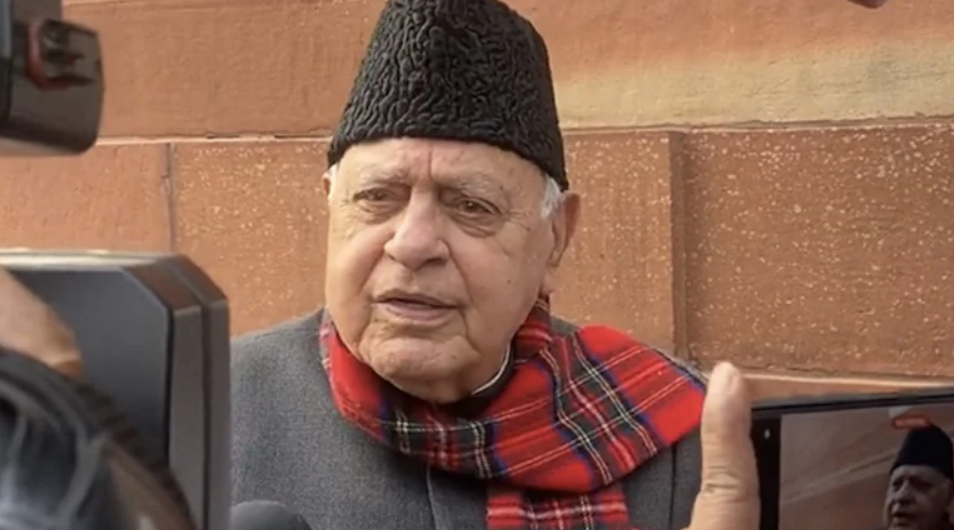
Former Jammu and Kashmir Chief Minister and now President of National Conference, Farooq Abdullah voiced out his criticisms against the Waqf Board, parallel to the ongoing Hazratbal controversy, calling out the installation of the new shrine as a grave mistake that shouldn’t have happened in the first place. There is an involvement of deep emotional and cultural significance the Hazratbal shine holds for the native, that is spoken in these remarks.
These remarks are not mere criticism alone, they shed a light on the delicate balance between religious administration and the sentiments of the devotees. The Waqf board’s decision to install the plaque of Ashoka emblem in the Hazrabtal mosque, Srinagar, has stirred disturbing emotions on the believers of the religion and the devotees. Abdullah’s criticisms bring forward a message of respect and sensitivity towards the legacy and emotions associated with such religious sites with huge heritage and cultural value.
The installation of the plaque is quite controversial which sparked widespread debate indeed. These debates touch upon the various perspectives on the issues such as authority, tradition and the rights of communities connected to the shrine. Abdulah takes the stand on behalf of the devotees by saying that it is an unfair decision that would affect the feelings and emotions of the people which are associated with the shrine. He via his statements urges to prioritise the voices of faithful rather than bureaucratic decisions, which will surely result in alienating people who hold these places dear.
Abdullah’s remarks grab the attention of growing public’s thoughts about the Waqf board’s decisions. As debates continue, they highlight the necessity for an open and transparent communication between authorities and local communities to preserve the integrity of religious sites like Hazratbal and at the same time, preserve harmony. Ensuring accountability and respecting public sentiments on matters that deal with religion and beliefs will be a key in resolving issues like these constructively.