
By Shreyanka Nandan
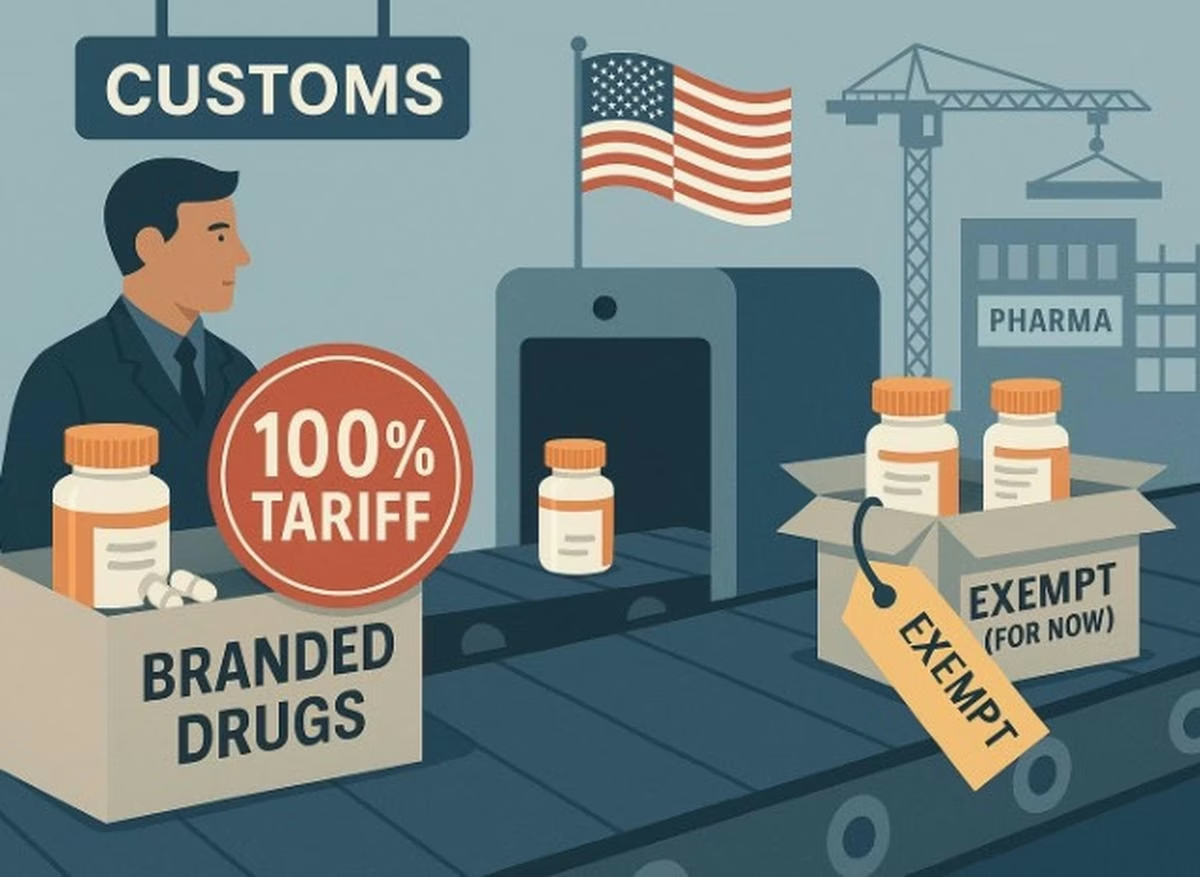
Indian pharmaceutical shares slipped after US President Donald Trump announced a 100% tariff on branded and patented drug imports, unsettling investors in a sector where the United States is the largest market. The American market accounts for nearly 35% of India’s total pharma exports, valued at about $10 billion in FY25.
Though the move is aimed at branded medicines, analysts are cautious about its potential ripple effects. “India, being an exporter of generic drugs, is unlikely to be impacted by this. But perhaps the president’s next target can be generic drugs,” observed Dr. V. K. Vijayakumar, Chief Investment Strategist at Geojit Investments.
Among Indian majors, Dr. Reddy’s Laboratories is seen as the most exposed. Nearly 47% of its earnings come from the US, with the bulk of manufacturing still based in India. Nomura projects its American business at $1.5 billion by FY26, but warns that “products manufactured in the US should contribute less than 15% to FY27F revenues,” leaving the company vulnerable.
Sun Pharma faces a different challenge, with 37% of its revenues tied to the US and over half of them coming from specialty brands. Its flagship psoriasis drug Ilumya is manufactured outside the US, making it a direct target. Still, analysts suggest the impact may be moderated. “Since Ilumya is a chronic therapy, Sun may be able to pass on the impact of tariffs and retain existing volumes,” Nomura noted.
Cipla appears relatively better positioned, with 30% of revenues linked to the US and a significant portion of that produced at its Invagen facilities in America. “The company is expanding its US manufacturing post regulatory issues at Indian sites,” said analysts, adding that this expansion could soften tariff risks.
Others like Zydus Lifesciences, Lupin, Aurobindo, and Glenmark remain under watch. While some have invested in US plants, their contribution to revenues is modest, leaving most of their business dependent on India-based production.
Market experts believe the near-term fallout will be limited, but warn of uncertainties ahead. “The real risk lies in whether complex generics and biosimilars will come under the tariff embargo in the future,” said Pankaj Pandey of ICICI Securities.
Trump’s order includes an exemption for companies with active US manufacturing projects, offering a potential escape route for those investing locally. Until more clarity emerges, however, India’s $10 billion export engine to the US will remain under pressure, with investors bracing for volatility in pharma counters.