
Agrim Agrawal
There have been several rounds of high-stakes indirect talks between the United States and Iran on the nuclear program of Tehran, with neither party able to reach a breakthrough deal despite the huge presence of military conflict in the eyes of the Middle East. The negotiations, which have been facilitated by the Foreign Minister of Oman, Badr al-Busaidi, have been held in Muscat and Geneva and diplomats have described the discussions as being one of the toughest in recent history.
The initial conference began at Muscat, Oman, early in February 2026, and there an American was present with an especially purposeful demonstration of American determination: the Navy Admiral Brad Cooper, who was the leader of U.S. Central Command, was at the negotiating table. On the one hand, common diplomatic discourse of Washington’s dual-track pressure strategies was being implemented, and on the other hand, military preparedness had U.S. warships off the coast of the Arabian Sea. President Trump, who has not dismissed the possibility of attacking the nuclear facilities in Iran, clarified that an international settlement was still his first choice, but he would not allow Iran to develop a nuclear weapon.
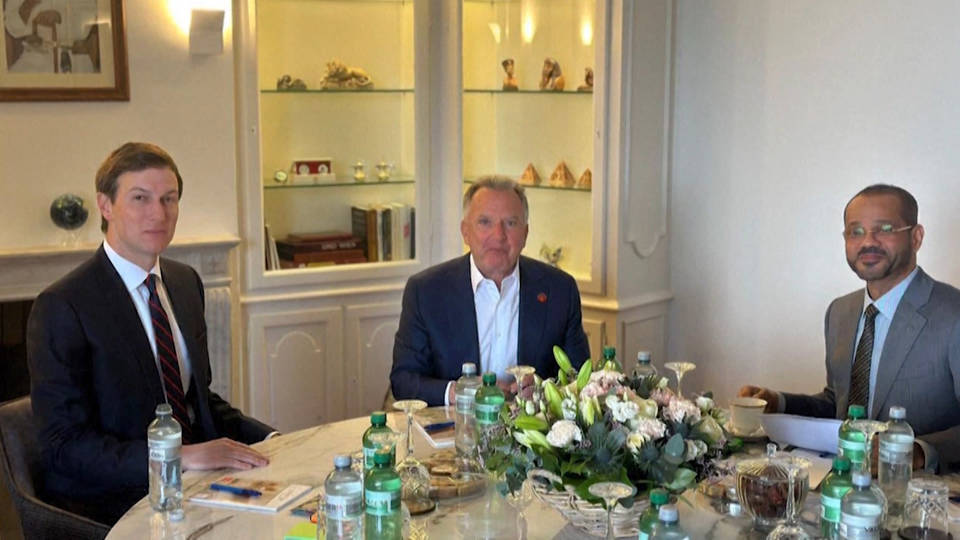
Another wave of indirect negotiations was held in Geneva on February 26, where Special Envoy of the U.S. Steve Witkoff and the son-in-law of Trump, Jared, headed the American delegation. The Tehran Foreign Minister, Abbas Araghchi, led Iran through the talks that he referred to as some of the most intensive and prolonged negotiations Iran had ever had. When the talks concluded, Oman, the mediator, announced no formal agreement, but said that it was making great strides. A follow-up discussion on a technical level was then planned to be continued in Vienna, the headquarters of the International Atomic Energy Agency, which would be central in any subsequent deal.
The fundamental areas of contention are still very entrenched. Washington is demanding full termination of uranium enrichment, and they are insisting that the ballistic missile program should be put on the negotiation table by Iran, a proposal that was described by Secretary of State Marco Rubio as a mega big problem since Tehran has made it clear that it is categorically rejecting this. Iran, in its turn, claims its sovereign rights to enrich uranium to generate peaceful energy and does not want to develop the negotiations beyond the nuclear issues. U.S. intelligence services have estimated that Iran is not the next day into a weapons program, but has made move that would enable it to develop a nuclear device faster in case it decides to do so.
It is a diplomatic process that is occurring against an unprecedented regional tension. The U.S has gathered a large number of aircrafts and warships in the area, as the Revolutionary Guard of Iran held military exercises in the Strait of Hormuz. In late February, Araghchi stated that a historic accord to prevent a military conflict was within reach but this does not give people much assurance. As negotiations proceed slowly to give tentative hope over actually striking a deal as opposed to declarations, the world is keenly observing two arch rivals as they go through the tightest path between diplomacy and war.