
By Sampurna Majumder
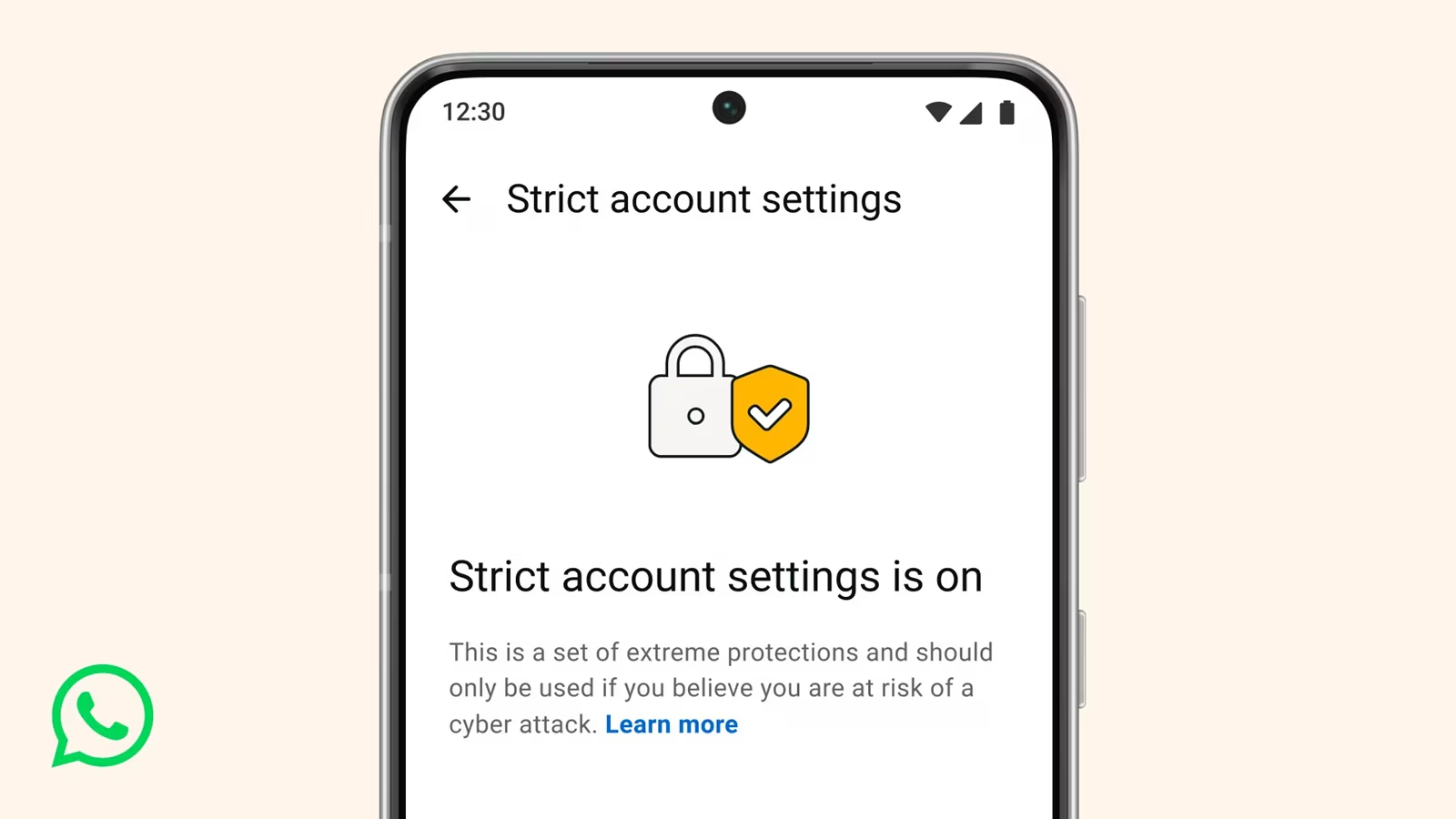
Strict Account Settings is a major new security feature that WhatsApp just introduced with the intention of giving users a stronger protection against targeted and sophisticated assaults. The feature is being progressively implemented to users on both iOS and Android, focusing on targeting people who may be at a higher risk of advanced threats, including journalists, public figures, activists, and others monitoring sensitive communications.
WhatsApp’s strictest security and privacy settings are combined into a single switch under Strict Account Settings, an optional one-tap lockdown mode. Once activated, a variety of measures are automatically applied by the program, saving users from having to manually adjust various specific settings. WhatsApp introduced the new feature “Lockdown-style” security that restricts the strangers to access someone’s account.
By blocking media and attachments from people who are not saved in your contacts, blocking link previews, and silencing calls from unknown numbers, Strict Account Settings help reduce exposure to harmful files, phishing, and surveillance vectors. By restricting who may add you to groups and who can access your profile photo, last seen, online presence, and information, the feature also tightens privacy settings.To further protect accounts, security notification alerts and two-step verification are enabled by default.
Users can activate Strict Account Settings by navigating to Settings → Privacy → Advanced in the WhatsApp app on their primary device; partner apps, such WhatsApp Web or desktop versions, are unable to modify this setting. As more users get the upgrade, WhatsApp promises the rollout will continue in the upcoming weeks.
With this step, WhatsApp joins other big tech companies that have implemented comparable fortified modes for high-risk users, such Google’s “Advanced Protection Mode” and Apple’s “Lockdown Mode.” For individuals who wish to prioritize the highest level of security and privacy in their messages, the additional precautions offer a helpful alternative, even though they may restrict some program functionality.