
By Disha Gupta
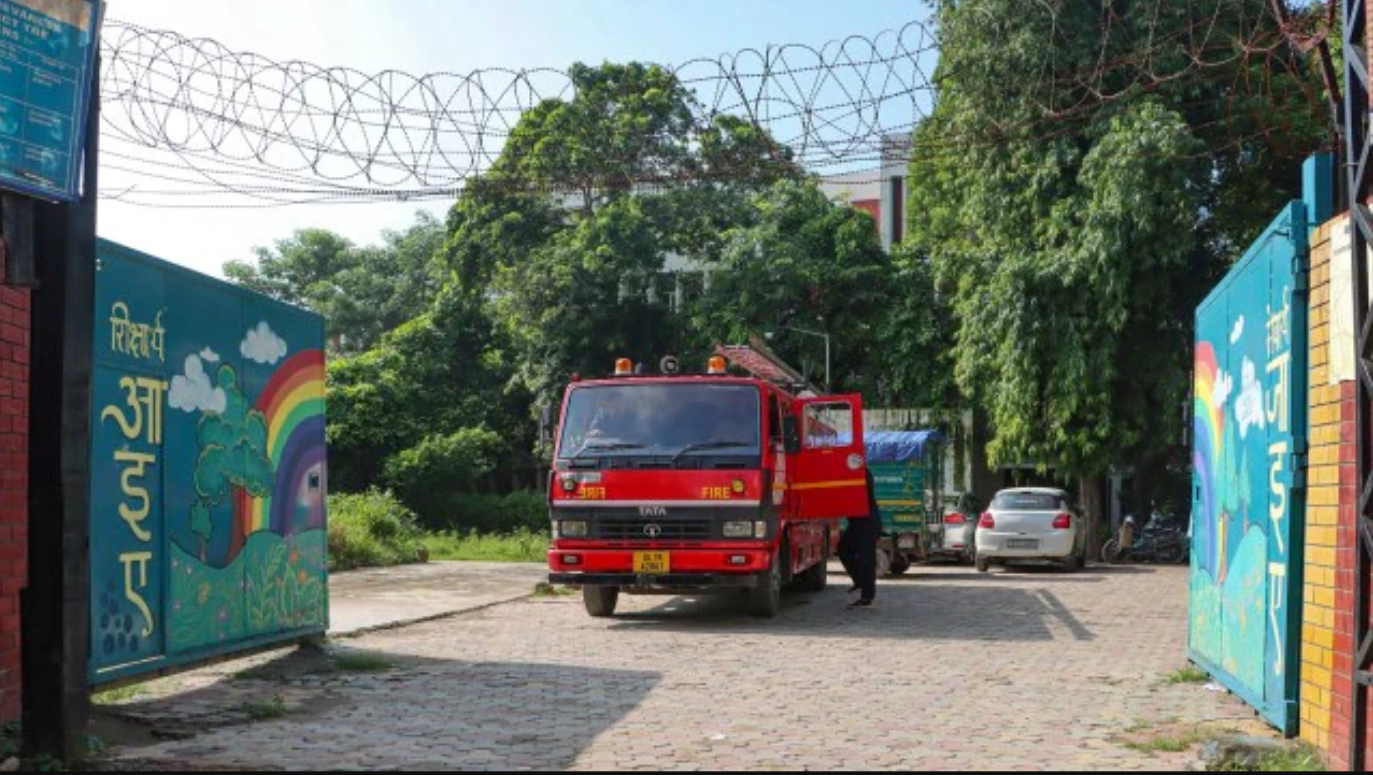
This week’s third bomb threat alert was sent via email to six Delhi schools on Thursday morning. According to Delhi Fire Services, the threat communication was received between 6.35 and 8 in the morning.
DFS officials listed several schools, including Rao Man Singh Senior Secondary Public School in Najafgarh, Convent School in Najafgarh, and Max Fort School in Dwarka, Indraprastha International School in Dwarka, and Andhra Education Society Senior Secondary School in Prasad Nagar.
The Delhi Police, bomb squads, and fire personnel reached the schools and began search operations. This marks the second threat received by Andhra School. Over 30 schools in Delhi received similar threats on Monday, which were later confirmed to be hoaxes. Bomb threats that were eventually deemed to be a hoax were sent via email to about 50 schools in the nation’s capital on Wednesday.
The police claim that in order to send the emails while preventing authorities from following them, the senders used a virtual private network, or VPN. There were 25 bomb threat cases in Delhi last year, and schools have already received these emails five days into this year. Only a few of the cases from the previous year were settled, and as of this writing, only one case has been resolved this year, according to police records.
A kid who sent his school a bomb threat in order to miss an exam was the focus of police attention last December. The cops were able to track the student more easily since he had only used an email address without a VPN. After receiving counseling, the child was allowed to leave.
A probe in July this year revealed that a 12-year-old boy had issued fake threats to two educational institutions: St. Thomas School in Dwarka and St. Stephen’s College at Delhi University. He was briefly detained and released after counseling.
The private school’s Class 8 student revealed during the session of counseling that he wanted schools to close and had inserted the institutions’ email addresses at random. According to an officer, the youngster had not used a VPN in this particular case either.