
By Hanika Kashyap
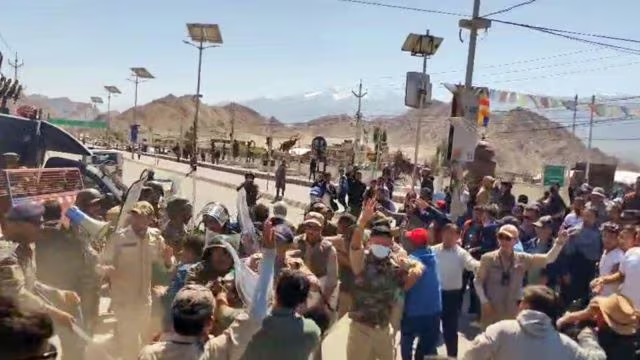
Statehood and Sixth Schedule protests in Ladakh turned violent on Wednesday, September 24, with protesters torching a BJP office and police responding with teargas.
Sonam Wangchuk told the press that police firing during the protest may have killed 3 to 5 young people and injured many others, though the exact numbers are unclear. He urged people to stay calm, said violence isn’t the answer, and announced that the 15-day hunger strike has been called off.
The protest broke out following a shutdown call in Leh by student and youth groups, announced after two elderly hunger strikers collapsed on Tuesday and were taken to the hospital.
Speaking to The Indian Express, Congress leader Tsering Namgyal said that after an elderly man and woman fainted during the hunger strike on Tuesday, news of the incident quickly circulated, prompting the students to call for a shutdown the next day. He added that on Wednesday morning, a large crowd gathered at the protest site, where the youth eventually lost control.
Namgyal stated that a significant presence of police and paramilitary forces was already deployed at the site.
In addition to the BJP office, protestors also set fire to a nearby security vehicle.
Activist Sonam Wangchuk, leading the statehood and Sixth Schedule protests, described the events in Leh as unfortunate. He expressed on X that his appeal for a peaceful approach had failed and urged the youth to halt the violence, warning that such actions only harm their cause.
Wangchuk, along with several others, has been on a hunger strike for 35 days. Plus, the Centre has scheduled the next round of talks for October 6.
Since Article 370 has been revoked and the Jammu and Kashmir Reorganisation Act, 2019, Ladakh’s political situation has been unsettled. When the former state was split into two union territories – Jammu & Kashmir with a legislature and Ladakh without – Ladakh came under direct control of the central government.
This has led to increasing calls for Ladakh to be included under the Sixth Schedule, which gives some tribal-majority areas in some northeastern states self-governance and financial autonomy through district councils. The demand is based on the fact that over 90% of Ladakh’s population belongs to the Scheduled Tribes.