
By Salonee Kulkarni
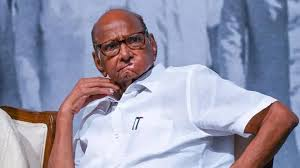
On July 28 this week, NCP leader Sharad Pawar put to rest speculation about a merger between the Nationalist Congress Party (Sharad Pawar faction) and the Nationalist Congress Party led by Ajit Pawar. Speaking to reporters in Baramati, he said, “It has no relevance.” The Hindu reported that speculation about the merger has since been dismissed.
Leaders of Ajit Pawar’s NCP, in alliance with the Mahayuti coalition alongside the BJP and the Eknath Shinde-led Shiv Sena, told the SIMC Press that despite speculation of a merger, some leaders in the faction would follow the decision of the opposition.
“What the opposition feels will not be exactly what we feel. What decision the Sharad Pawar NCP alliance makes is solely their decision. There is speculation that the NCP (Sharad Pawar) is planning to join the Mahayuti alliance in Maharashtra. I am an ordinary party activist, and it is not appropriate for me to comment on these speculations. Whatever decision the opposition makes, I will follow it,” said Kalyan Tatyasaheb Akhade, State Head, Other Backward Classes Cell.
However, some members of the party dismissed the speculation and disagreed with the possibility of a merger. “This is our network, and that is their network. We do not interfere in each other’s networks, and the speculation about an alliance formed by Sharad Pawar’s NCP does not hold relevance for us,” said Idrisabhai Iliasabhai Nayakwadi, State Head, Minority Division.
Ground-level reports on the NCP’s handling of farmer issues in Balewadi, Pune, and the speculation about the merger offered insights into whether a reconciliation between the parties would mean agricultural unity, or would instead dilute the independent identity built by the Mahayuti alliance. An NCP leader highlighted the party’s management of migration, noting that younger farmers migrate to urban areas for better opportunities due to a lack of agricultural assistance. However, the leader remained positive about the schemes introduced by the government.
“Despite the faction split, both parties have a similar stance when it comes to abiding by what is truthful. In terms of the agrarian distress witnessed, both parties are committed to uplifting the community together, even as young farmers move to urban areas. Twenty-six lakh farmers were granted a relief package by the current ruling party in Maharashtra,” said Manikrao Kadam, State Head, Kisan Cell.
When and why did the faction split?
Senior leaders of both NCP factions have repeatedly denied the possibility of a merger. Speculation resurfaced after Parth Pawar and Sharad Pawar met in Delhi. Party sources said the meeting was not a political discussion but was linked to Parth Pawar’s engagement scheduled for July 29. The meeting was a coincidence, a leader claimed, as reported by The Hindu.
However, this was not the first time such speculation had emerged. After the death of Deputy Chief Minister Ajit Pawar on January 28, political activity in Maharashtra was expected to take a turbulent turn. Speculation was fuelled by uncertainty, and Rajya Sabha MP Sunetra Pawar was elected as the next leader of the Nationalist Congress Party’s state legislative party. The oath ceremony took place on January 31. Historically, this signalled a shift in Maharashtra’s politics and representation, as she became the first woman to hold the post in the state, as reported by Frontline.
On July 2, 2023, after months of speculation, the NCP leader split the party and joined the Eknath Shinde–Devendra Fadnavis government. In February 2024, the Election Commission granted Ajit Pawar’s party the NCP name and the “clock” symbol. Ajit Pawar had ambitions for the chief ministerial post; those ambitions faced multiple setbacks, and he split the faction on July 5, as reported by Frontline.
Amid the speculation that resurfaced in 2026, the personal assistant to Nita Vijay Dhawan, State Head, Disability Cell, told the SIMC Press, “The core ideology of the NCP factions led by Sharad Pawar and Ajit Pawar is not different. The split resulted from internal disputes.”
As the faction remains split, the political fallout from an emerging issue — OBC-Marathwada reservation — has come to light once again.
Manoj Jarange Patil has demanded Maratha reservation under the OBC category. He has called for implementation of the Hyderabad Gazette and the creation of a ministry for the Maratha community, as reported by the Deccan Herald.
The Maha Vikas Aghadi has aggressively suggested that the constitutional rights of the OBC community are under threat under the current NDA government. The ruling party has dismissed this allegation and reiterated that it is handling the situation with care.
“It is the job of the opposition to create hurdles. The ruling party’s stance on the constitutional rights of citizens is reflected through its commitment to the principles of the Constitution. The opposition often tries to divert people’s attention; that is their job. In Maharashtra, the environment around reservations is strained and inappropriate. No one should attack the rights of individuals who have been granted constitutional protections, nor should they be alienated from those rights. The government should act appropriately. Neither should the OBC community bear the brunt of injustice, nor should the Maratha community be alienated from their rights. This conflict should not be allowed to escalate; doing so would not suit Maharashtra’s traditions. While managing this issue, injustice should not prevail. The OBC community should not face injustice — we are firm on that,” said Kalyan Tatyasaheb Akhade, State Head, Other Backward Classes Cell, as reported by the SIMC Press.
It has been three years since the Maratha reservation campaign began, and it is now entering a decisive phase, with a fast-unto-death agitation planned from August 29. Maharashtra’s political air echoes with the slogans “Ek Maratha, Lakh Maratha” and “Manoj Dada… aage badho, hum tumhare saath hain.” Speculation about a faction merger will shape how the Marathas — who have historical links to the Kunbi caste — are treated under the OBC umbrella.
On the other end, some communities are seeking to exit the OBC list altogether and be listed under the Most Backward Class quota, reflecting concerns over how certain groups are affected by reservation benefits. These communities are mainly Mali, Dhangar, and Vanjari.
“Through the Sant Savata Mali Sangathan, I have supported young people from the Mali community to help them become economically empowered through education. Social workers in the organisation continue to work towards this cause and ensure that they are politically empowered to enter politics. Young people from the community are often hesitant to join politics due to negative perceptions of it as a career. We try our best, and we continue to do so,” said Kalyan Tatyasaheb Akhade, State Head, Other Backward Classes Cell.
The Marathi film Phule, released in 2025 during the Mahayuti alliance’s governance and based on the life of social reformer Mahatma Jyotirao Phule, who belonged to the Mali community, was postponed and faced censorship cuts over allegations of promoting casteism and portraying the Brahmin community negatively. The MVA, as the opposition, remained silent on the matter and did not protest. Is a merger a step towards better governance, or a nail in the coffin of constitutional rights, as both factions weigh their ideological positions?